Brampton food hygiene MWAC and professional sanitation experts help you keep restaurants, commissaries, bakeries, warehouses, and mobile food operations clean to code. They disinfect frequently contacted surfaces, food-contact surfaces, equipment, floors, drains, restrooms, and prep zones using approved chemicals, correct dilution, and verified exposure periods. in maintaining restaurants, food supply centers, baking operations, warehouses, and mobile food operations to code. They disinfect frequently touched areas, food preparation zones, equipment, floors, drains, restrooms, and food handling zones with approved chemicals, correct concentration, and recorded contact times.
Important Highlights
- Brampton's food safety cleaning experts provide services to restaurants, grocery departments, commissaries, warehouses, bakeries, schools, mobile vendors, and allergen-sensitive operations.
- Cross-contamination elimination is achieved by sanitizing high-touch surfaces, food-contact equipment, kitchens, floors, drains, restrooms, and storage areas with compartmentalized approaches.
- Filing of finalization through samples, reviews, and correction logs ensures qualified vendors have confirmed proper chemical concentration, appropriateness, and exposure duration.
- Sanitation calendars must follow danger, production volume, changeovers, releases, and guidelines, with routine, weekly, and annual duties assigned by zone.
- Emphasize suppliers displaying HACCP, sanitation knowledge, safety training instruction, insurance, credentials, color-categorized instruments, and compliance-ready hygiene files.
Which Brampton Facilities Need Food Safety Cleaning?
Brampton establishments that manage, store, prepare, package, or offer food require hygiene cleaning. Implement it if your business is falls under health reviews, food regulations, or HACCP protocols. The rule covers eateries, dining facilities, warehouses, supermarket areas, meat counters, fish departments, retail outlets, and institutional kitchens.
You also need proper hygiene cleaning in warehouses, food manufacturing plants, cold storage sites, retail bakeries, school nutrition programs, banquet halls, and meal delivery hubs. Portable and seasonal businesses count too, including food trucks, event vendors, and temporary booths. If your staff work with raw supplies, divide prepared foods, warm dishes, or organize allergen inventory, your facility needs recorded sanitation procedures. In Brampton, food safety isn't elective; it's part of regulatory, business, and safety compliance.
What Do Brampton Cleaning Professionals Handle?
Your facility requires professional cleaners who disinfect frequently contacted surfaces, kitchens, all floor types, and restrooms to maintain food safety compliance and public health standards. These zones receive attention because they represent the most significant contamination risk, hazardous walking conditions, and breaches of sanitation codes.
Understanding their cleaning procedures allows you to confirm your facility's cleaning meets operational demands and regulatory compliance.
Focusing on High-Touch Surface Cleaning
Controlling high-touch surface cleaning is essential for Brampton janitorial specialists because frequently touched zones can transmit microbes and organic matter across a location. You need a written protocol for disinfecting frequently touched items like handles, plates, switches, railings, equipment controls, payment terminals, and fridge pulls. Implementing touchpoint mapping, teams locate every commonly touched surface and assign cleaning timing
confirm successful disinfection
Kitchens, Floors, and Restrooms
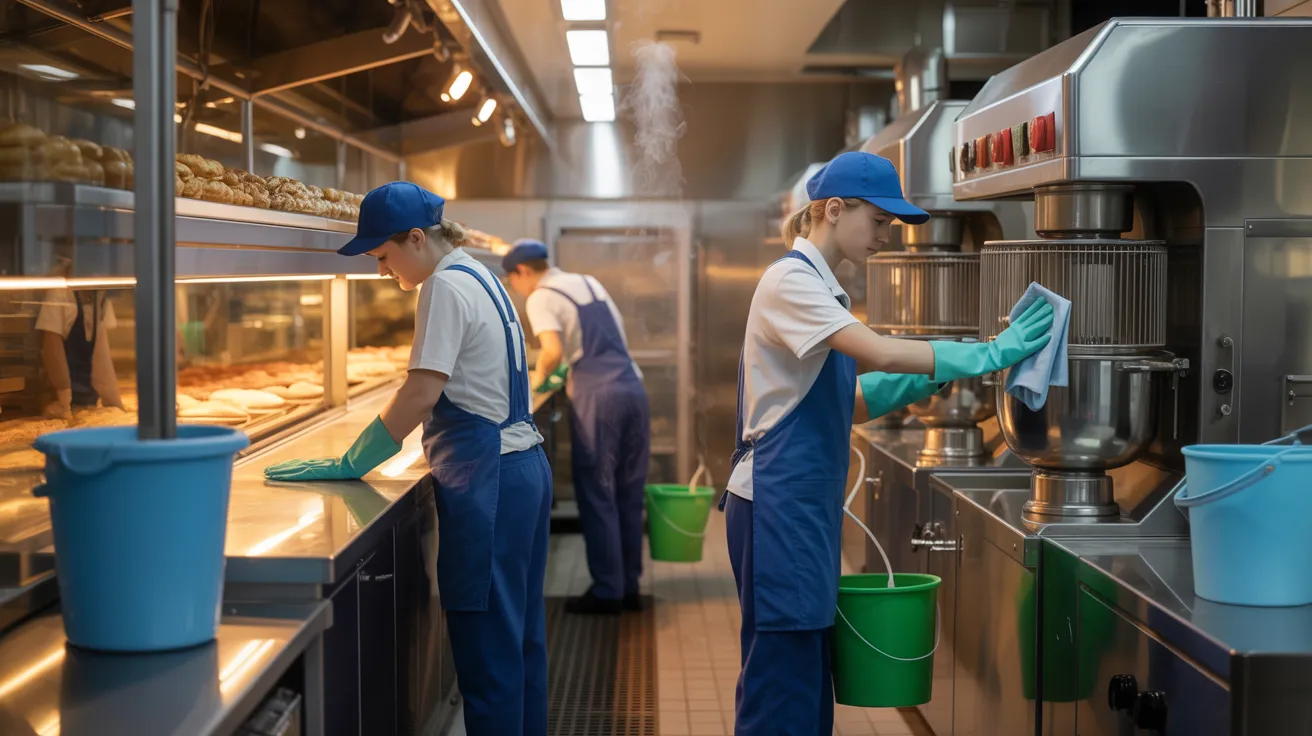
Brampton cleaning services zero in on kitchens, floors, and restrooms as each zone presents distinct sanitation, accident, and public health concerns. In industrial kitchens, you need degreasing on cook lines, equipment exteriors, drains, prep surfaces, and splash zones to reduce bacterial growth and pest activity.
Floor care that is recorded should equally be anticipated. Technicians scrub and extract buildup from tile grout, ceramic surfaces, and vinyl floors, then apply appropriate drying controls so you can limit falls and maintain code-compliant conditions. They also address entryways where moisture and debris migrate indoors.
Restroom cleaning involves disinfecting touchpoints, fixtures, partitions, dispensers, and waste containers, replenishing amenities and managing odor. They also maintain restaurant cleaning supply rooms where product storage, sink cleanliness, and drain systems impact daily sanitation standards and worker protection.
The Importance of Food Safety Cleaning in Brampton
To comply with regulatory mandates and succeed in audits, Brampton facilities must follow appropriate cleaning protocols. You also reduce bacterial spread through proper cleaning of food-preparation surfaces, appliances, and frequently-touched items. Most importantly, you help protect community wellness by reducing the chance of food poisoning in your establishment.
Sanitary Standards Adherence
Brampton food operations must comply with stringent health requirements, so cleaning procedures is vital to fulfilling health codes, ensuring the safety of customers, and avoiding penalties. You must maintain hygienic food handling zones, documented cleaning schedules, appropriate product handling, and traceable training practices that meet municipal and provincial inspection expectations.
Good hygiene practices facilitates allergen reduction by minimizing contaminants on common tools and high-touch areas.
Cross-Contamination Prevention
Adhering to regulatory guidelines requires your skill in preventing cross-contamination throughout routine preparation and sanitation work. You need to isolate uncooked items from finished products, sanitize work stations after each task, and keep chemicals away from food-contact items. Organized systems minimize contamination events and ensure consistent compliance during inspections.
You should establish allergen separation to prevent major allergens from touching shared surfaces, containers, or equipment. Employ separate boards, labeled implements, and strict utensil labeling so employees avoid combining products throughout cooking or serving. Require handwashing after handling raw meat, seafood, eggs, or allergen-containing products. Replace wiping cloths regularly, and verify sanitizer strength with test strips. When staff members receive training on these procedures every shift, you create a cleaner, safer operation that meets Brampton's food safety expectations daily.
Public Health Defense
If proper sanitation declines, you don't merely face potential inspection issues—you boost the probability of pathogenic contamination harming customers, staff, and the broader Brampton region. You also weaken your role in safeguarding community wellness, especially in busy food facilities where pathogens travel quickly through surfaces, equipment, and touchpoints.
You need sanitation systems that eliminate soils, disinfect appropriately, and validate outcomes. This requires following exposure durations, selecting approved disinfectants, logging schedules, and coaching employees to meet health-unit expectations. These controls promote pathogen control by decreasing microbial counts before contaminating food or hands. Throughout Brampton, strong cleaning safeguards susceptible populations, minimizes disease potential, and demonstrates your diligence. When you adhere to standards, you go beyond requirements—you mitigate risk and facilitate secure food handling region-wide.
Why Is Cleaning Essential for Food Safety Compliance?
Rigorous cleaning routines support food safety compliance by minimizing contamination hazards, limiting pathogen development, and positioning your facility in accordance with sanitation requirements under HACCP-based programs and public health regulations. You confirm that food-contact surfaces appear visibly clean and microbiologically controlled, backing documented preventive controls and inspection readiness.
Comprehensive cleaning also reinforces allergen prevention by removing residues that can cause undeclared allergen exposure. When you pair established sanitation practices with compliance training, your staff can execute standardized methods, handle approved chemicals correctly, complete records accurately, and manage variations ahead of escalation occurs. Systematic cleaning supports audit trails, establishes remediation efforts, and exhibits commitment during audits. Additionally, it assists you preserve product quality, sustain compliance standards, and reduce the possibility of compliance actions, market recalls, formal complaints, and unnecessary health dangers.
What's the Best Time to Plan Commercial Cleaning?
maintenance activities.
facility shutdowns, seasonal-driven soil buildup, or pest activity periods.
What Should You Look For in Brampton Cleaning Experts?
Begin by evaluating providers based on food-safe sanitation requirements—not solely on price alone. You should confirm that each organization comprehends CFIA, public health, and HACCP-aligned expectations applicable to your facility. Request insurance certificates, WHMIS compliance, staff training documentation, and oversight procedures. Assess whether technicians recognize cross-contamination risks, chemical handling protocols, and verifiable sanitation records.
Additionally, you need to evaluate operational reliability and responsibility. Obtain references from Brampton food operations, then review response times, corrective measures, and communication practices. Verify the company supports supplier audits and can deliver inspection-ready documentation when inspectors or external parties need proof. Verify equipment is maintained, colour-coded tools are applied correctly, and location-specific dangers are identified. A qualified provider protects compliance, product quality, and your reputation.
What does a cleaning and sanitation plan encompass?
Put together a written plan that clarifies every sanitation task, standard, and responsibility ahead of production commencement. You should specify cleaning intervals, permitted substances, dilution percentages, exposure times, instruments, and inspection methods for each sector, surface, and equipment. Make sure to include pre-operational inspections, corrective actions, and employee training requirements.
Your plan should also address contamination prevention, garbage management, pest control procedures, and recorded timelines for bathrooms, drainage systems, surfaces, and food-preparation zones. Detail how you'll keep raw and prepared foods apart, support ingredient tracking, and ensure accurate allergen labeling through validated cleaning between product changes. You should designate accountability, maintain signed records, and compare results against regulatory standards, HACCP controls, and customer requirements. When gaps appear, revise procedures immediately and re-educate staff.
Regular Posed Inquiries
Are cleaning services offered for nighttime operations in Brampton properties?
Yes, you can book cleaning services to support nighttime operations in Brampton facilities. You'll organize overnight sanitation around production schedules, security measures, and personnel needs. Services generally map overnight logistics to reduce disruption, maintain standards, and document completed tasks. You should confirm arrival timeframes, supervision, access protocols, and disposal methods before beginning service. If you operate regulated spaces, you'll also want cleaning records that enable audits and compliance verification.
Are hazard containment services provided from sanitation professionals?
Yes, you can expect many Brampton sanitation professionals to offer emergency spill response solutions. They manage hazardous materials, assess risks, isolate affected areas, and begin swift cleanup to reduce exposure and business interruption. You should verify arrival timeframes, training certifications, safety procedures, and disposal procedures. If your facility must comply with industry standards, select a service that documents incidents, maintains regulatory procedures, and supports audit readiness.
Are green disinfectants safe for food-handling equipment?
Absolutely, green disinfectants prove to be safe for food-contact surfaces when you choose solutions certified for food use and complying with regulations. You must confirm application timing, mixing proportions, and rinse procedures prior to application. Plant based formulas reduce chemical hazards, though you still need confirmation of performance against specific pathogens. For keeping surfaces residue-free, follow precise manufacturer instructions and confirm your disinfectant satisfies applicable food industry sanitation standards.
Will sanitation programs adjust for production fluctuations?
Yes, you can customize cleaning plans for seasonal variations. You should adjust schedules, staff levels, sanitizers, and confirmation procedures to align with operational cycles while sustaining regulatory adherence. You'll decrease equipment downtime by scheduling cleaning around production shifts, maximum output, and usage cycles. You should further modify SSOPs, instruction programs, and environmental monitoring to capture transient threats, additional allergens, or increased soiling. Periodic assessments preserve your schedule functional.
Are professional cleaning companies offering employee instruction on sanitation best practices?
Indeed, commercial cleaning providers typically provide staff training on proper hygiene. Your staff receives instruction on proper chemical use, contact times, preventing cross-contamination, equipment disassembly, and record-keeping. They typically follow training with HACCP, GMP, and CFIA or local public health criteria. Many perform sanitation audits to confirm standards, identify gaps, and strengthen improvement measures. This assists you to establish reliable processes, achieve compliance, and decrease foodborne illness risks each day.
Final Thoughts
Partnering with Brampton food safety and commercial cleaning professionals goes beyond tidying—it ensures your facility stays inspection-compliant and your standards are defensible. From kitchen areas to production zones, each cleaned area and maintained corner reduces health hazards and prevents major expenses. By scheduling maintenance at suitable frequencies and implementing a thorough cleaning program, you shield your workforce, clients, and your reputation. In a heavily regulated sector, sanitary conditions are non-negotiable—they're vital to proper management.